


The mystery surrounding the Iberian blackout continues to baffle experts, with each theory proposed since April 28 facing skepticism or outright refutation. As we await a comprehensive report from Spanish authorities, speculations about causes like sudden atmospheric shifts or grid overload due to an increased reliance on Renewable Energy Sources have emerged but swiftly faded from public discourse, as experts present documented rebuttals.
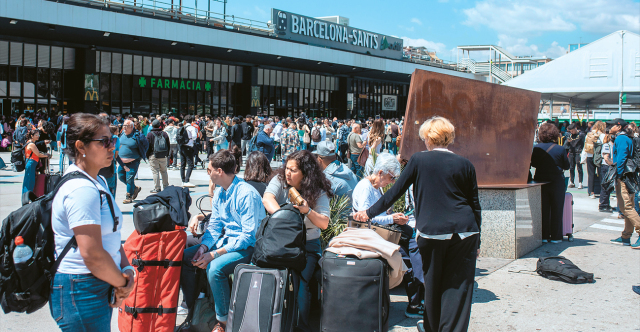
In contrast, the potential for a cyberattack remains under serious investigation by Spanish judicial authorities, particularly following the April 28 event where the electricity grid across the Iberian Peninsula experienced a severe disruption lasting approximately 16 hours.
This situation highlights the complexities of modern energy networks, suggesting they are now too intricate even for their own operators to fully understand. The inability to pinpoint exact reasons for systemic failures, which can drastically impact the lives of millions, raises alarms. The ongoing inquiry into a potential cyber threat—specifically, a targeted hacking of the control systems—strengthens this concern.
What about Greece?
This raises an important question for Greece: If Spain’s unprecedented blackout remains unsolved despite its leadership in Renewable Energy integration, could Greece face an even greater risk? Professor Stavros Papathanasiou from the National Technical University of Athens offers valuable insights on this matter.
Professor Papathanasiou asserts, “I wouldn’t necessarily state that Greece is more vulnerable than Spain. While Spain and Portugal adopted Renewable Energy Sources earlier, Greece has now surpassed them in this domain. We face both benefits and risks. I don’t see cause for alarm; we don’t have greater exposure than Spain or Portugal. Blackouts have occurred worldwide, including in Italy, Switzerland, and the United States, as well as in Greece, illustrated by the major blackout before the 2004 Olympic Games.”
As for the similarities between the countries, he points out, “Both Spain and Greece share a concerning vulnerability. The Iberian grid connects to the European network through limited interconnection lines with France. During the April 28 incident, these lines were severed, contributing to the system’s failure.”
“Both Iberia and Greece are somewhat isolated within Europe, possessing limited connections to the North and West. This creates a vulnerability that’s a primary concern for European grid operators, who seek to enhance cross-border interconnections for greater system security and integration into the European energy market.”
“Dinosaur” Networks
Broadening the discussion, Professor Papathanasiou characterizes electrical systems as “living organisms”—complex and inherently fragile. The rapid transformation of production and demand outpaces our understanding of these changes. Power grids resemble “dinosaurs”—they’re typically slow to evolve, shaped over 100–150 years, while we’re undergoing significant changes in just a few years. For instance, the share of RES in Greece has doubled in just five years.”
“The transition from traditional large plants to a multitude of small renewable sources requires operators to adopt entirely new management strategies. Additionally, shifts in demand, such as the rise of electric vehicles, complicate grid management further. While technological advancements may offer solutions, the rapid pace of change means we must not only keep up but also anticipate emerging challenges.”
In conclusion, Professor Papathanasiou notes, “Blackouts can happen anywhere; various factors contribute—technical characteristics, climate change, or cyber threats. However, I wouldn’t say Greece is defenseless. While extreme incidents are uncommon, they are not impossible. No system is immune to failure, so we must focus on risk reduction.”
ADMIE (Independent Power Transmission Operator), Greece’s primary grid operator, views the Iberian blackout with a level of calm. Vice President Yiannis Margaris commented, “Greece is not connected to Spain’s situation. Nothing happened here; the issue was contained at the French border. However, we remain vigilant, especially during lower consumption periods like spring, when we generate excess energy from RES.”
In discussing the Iberian blackout, the term “cyberattack” often implies state involvement. However, Efrén Varón, a Spanish cybercrime expert, emphasizes the probability of non-state actors or technical failures causing the outage, arguing that a coordinated power shutdown across multiple countries is implausible without inside knowledge. Instead, he suggests the possibility of a terrorist act or sabotage.
Israel, Russia…or Kim?
As the official inquiry into the blackout continues, public discourse is rife with conspiracy theories. The speculation reached such a point that Spanish Prime Minister Pedro Sánchez urged citizens not to believe everything seen on social media, including theories alleging the outage was retaliation by Israel, related to a $7.5 million arms deal cancellation just before the blackout.
Beyond Israel, other alternative suspects included North Korea and Morocco (which offered assistance), with Russia often named in these discussions. Rumors even suggested Ursula von der Leyen had blamed Russian hackers, though no evidence supported this claim. In fact, European Commission officials stated there was no indication of a premeditated act behind the blackout.
Nonetheless, Russia’s track record raises eyebrows. Russian hackers have demonstrated the capability to disrupt power grids, as illustrated by attacks on Ukraine. Spain’s official cyber defense body acknowledges previous attempts using malware that had targeted Spanish facilities.
Political Electricity
If a cyber-terrorist were indeed responsible for disrupting Spain and Portugal’s power systems, one might expect a claim of responsibility. However, this has not occurred with El Cero. Politically, the incident has been leveraged by opposition parties who accuse Sánchez’s government of incompetence and secrecy as they critique the energy policy favoring Renewable Energy Sources over nuclear power, considered more reliable by many.
The blackout has become a pivotal moment in Spain’s fragmented political atmosphere, potentially jeopardizing the coalition government led by Sánchez. In defending his green energy agenda, Sánchez emphasized the rapid restoration of power following the blackout.
The 5 Seconds of Destruction
The ongoing discourse about Spain’s energy future reflects persistent tensions among political factions. Sánchez’s position is not unfounded; the blackout stemmed from an unexpected loss of 15 gigawatts—nearly 60% of the grid load—over five seconds, plunging transmission frequency below the critical threshold of 50 Hz.
Despite the brief nature of this disruption, it was sufficient to trigger automatic protection mechanisms, leading the Iberian Peninsula (and parts of France) to disconnect from the European grid. Notably, while Spain’s five nuclear plants could compensate for a portion of the lost energy, they could only provide 7.4 GW out of the 15 GW missing.
The Green Gamble
The blackout has resulted in an estimated financial loss of €1.6 billion, reigniting the debate around the speed of integrating Renewable Energy Sources into the power grid and the overall transition to a green economy. At the moment of failure, Spain’s clean energy sources contributed 60.64% from photovoltaics, 12% from wind, and 11.6% from nuclear. Various accounts suggest that the outage started with a potential short circuit, possibly due to overloads from photovoltaic facilities.
Nevertheless, Beatriz Corredor, president of REE (Spain’s electricity grid operator), has urged against linking the blackout to renewable energy policies, suggesting it was a coincidence that renewables were at their peak when the incident occurred. However, she has faced scrutiny, accused of lacking expertise and merely echoing government narratives while drawing a substantial salary.
Despite her defense of green energy, the criticism has mounted that Spain’s aggressive goal of sourcing 81% of its electricity from renewables by 2030 may have been premature, given they already reached 58.95%.
No Batteries
Renewables integrate into the grid very differently from traditional power plants, posing a heightened risk of grid failures. Investments typically prioritize renewable energy production over enhancing resilience within the grid infrastructure. A significant shortfall in storage systems (battery parks) also exists, hindering the ability to temporarily manage excess energy and mitigate blackout risks.
The counterargument to this technical critique resides in economic factors. Spain has positioned itself as a leading environmentally friendly electricity producer and remains competitive owing to notably low wholesale prices. As such, even amidst the fallout from a significant blackout, Spain is unlikely to reconsider its energy policies or slow its transition to a greener economy.
Ask me anything
Explore related questions


