


Global Ship Lease (GSL), under the ownership of George Youroukos, has demonstrated robust profitability in the first quarter of 2025. Despite global uncertainties, the company experienced noteworthy growth in key economic metrics compared to the same period last year.
Youroukos, the executive chairman of GSL, commented on the firm’s advancements, highlighting the significant role geopolitical factors play within the transportation sector and the overall economy.

In this light, the Greek shipowner emphasized that GSL has successfully bolstered its charter coverage for vessels at competitive prices. He remarked, “The US tariff situation remains dynamic, and the initial impacts on supply chains have been substantial.”
However, he noted that predicting the extent and nature of future impacts is challenging, making operational flexibility increasingly crucial. Accordingly, Global Ship Lease has observed a surge in demand for medium and small-sized container ships from shipping lines, which are aiming to enhance flexibility in their networks to adapt to shifting cargo flows.
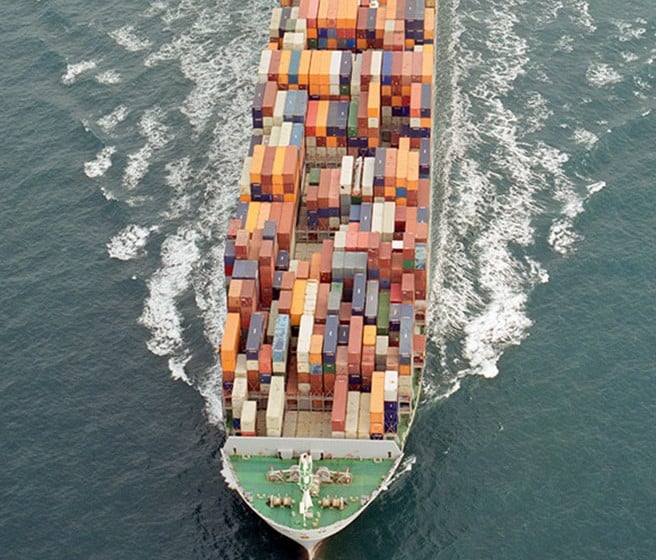
It is worth mentioning that Global Ship Lease operates a fleet of 69 containerships, with capacities ranging from 2,207 to 11,040 TEUs and an average age of 17.5 years. As of March 31, 2025, the average duration remaining on the company’s charters was 2.3 years, measured on a TEU-weighted basis.
Strong Performance
During the first quarter of 2025, the company reported revenues of $191 million, up from $179.5 million in the same quarter of 2024—a growth of 6.3%. Profits reached $121 million, compared to $89.5 million the previous year, marking a 35.2% increase.
The company’s contracted revenue stood at $1.9 billion, which rises to $2.37 billion when including options from charterers. Operating expenses for the vessels (covering salaries, repairs, insurance, etc.) saw a 4.4% increase to $50 million in the first quarter of 2025, up from $47.9 million during the same period last year. The rise of $2.1 million is primarily attributed to the addition of four newly acquired vessels and inflationary pressures.


