



Israeli officials have conveyed to Washington that they are unwilling to wait two weeks for any potential agreement with Iran regarding the dismantling of key parts of Tehran’s nuclear program. They have indicated, according to two sources speaking to Reuters, that Israel may take unilateral action before this deadline, amid ongoing discussions in the U.S. about American involvement in the conflict.
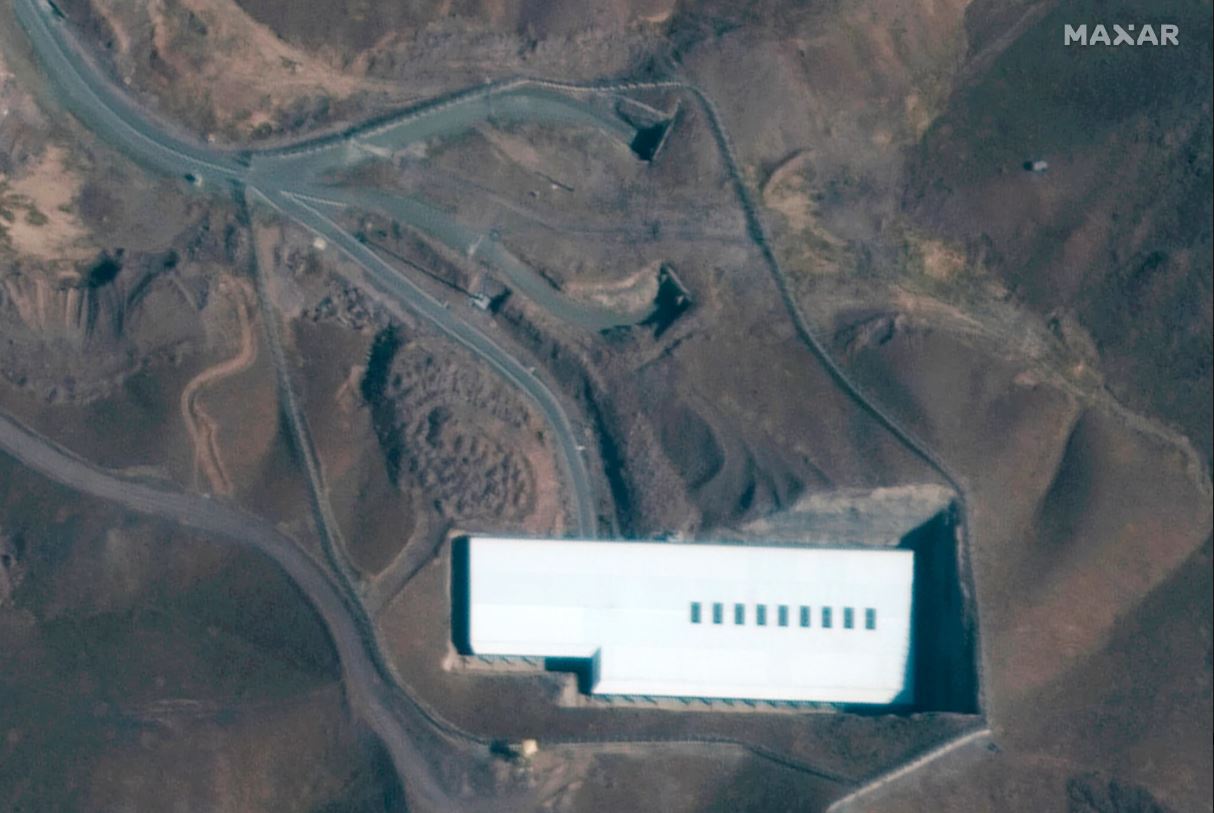
Israelis believe they have a limited timeframe to act against the Fordow facility, which they consider a critical element of Tehran’s nuclear program. The United States is the only nation that possesses bombs capable of penetrating the mountainous terrain where this underground site is located.

Reuters reported today that the U.S. is moving B-2 bombers to Guam, citing two American officials, though it remains unclear if this relocation is related to the conflict in the Middle East. The B-2s can carry the GBU-57 Massive Ordnance Penetrator, designed for hitting underground targets.
The “tense” phone call
According to the two sources, Israel expressed its concerns to Trump administration officials during a phone call on Thursday, which was described as “tense.”
Unnamed sources indicated that Israeli officials communicated their reluctance to wait for the two-week period set by Donald Trump before deciding on U.S. involvement in the war. Participants in the call included Israeli Prime Minister Benjamin Netanyahu, Defense Minister Israel Katz, and Chief of Staff Eyal Zamir, as reported by a security service source.
A source in Washington stated that Israel informed the U.S. government it believes the two-week timeline set by Trump is too lengthy and that more urgent action is needed. This source did not specify whether the Israeli side raised this issue during the “tense” phone call.
During the conversation, U.S. Vice President Jay D. Vance reportedly backed away, asserting that the U.S. should not become directly involved for fear that Israel would drag the country into war. U.S. Defense Secretary Pete Hegseth also participated in the call, according to a source. Reuters could not ascertain which other officials were on the line, although the Jerusalem Post reported that the call took place on Thursday.
The White House declined to comment on the report, and the office of the Israeli Prime Minister did not respond to a request for comment. The Iranian mission to the United Nations did not reply to a similar inquiry.
Towards unilateral action against Fordow?
Prime Minister Benjamin Netanyahu has not publicly ruled out a unilateral Israeli strike against Fordow, though officials have not provided details on how such an action might be carried out.
Four sources suggest that it is becoming increasingly likely for Israel to take independent action. Their air superiority over Iran makes such an operation more feasible, according to two sources, though it remains risky.
Israelis see a narrow window of opportunity given the costs of warfare, one source notes, adding, “I don’t see them waiting much longer.”
Scenarios for Israeli actions
It is unclear whether an operation against the Fordow facility would involve bombing, ground forces, or both. Two of Reuters’ sources noted that rather than attempting to destroy the entire unit, Israel might aim to cause significant damage to it. This could involve focusing on destroying what is inside rather than the complete destruction of the facility itself.
Some analysts predict that Israel might employ special forces to infiltrate Fordow and detonate explosives from within. Another scenario under consideration involves dropping a succession of bombs to breach the fortified facility, similar to an operation that killed Hezbollah leader Hassan Nasrallah in a southern Beirut neighborhood last year. Such an operation might be accompanied by a special forces raid, according to the source.
It remains unclear if Israel possesses sufficiently powerful bombs that would allow penetration of Fordow’s underground fortifications, and it is widely believed that for a successful operation, U.S. intervention is necessary. However, even with such massive firepower that a joint U.S.-Israeli military operation could provide, military and nuclear experts believe that such an operation would only temporarily delay Iran’s nuclear program, which the West fears is aimed at developing nuclear weapons—a claim that Iran denies.


